Soil Wealth ICP team members Doris Blaesing and Jesse Clune visited vegetable growers in Western Australia in May 2026 alongside the vegetablesWA VegNET team.
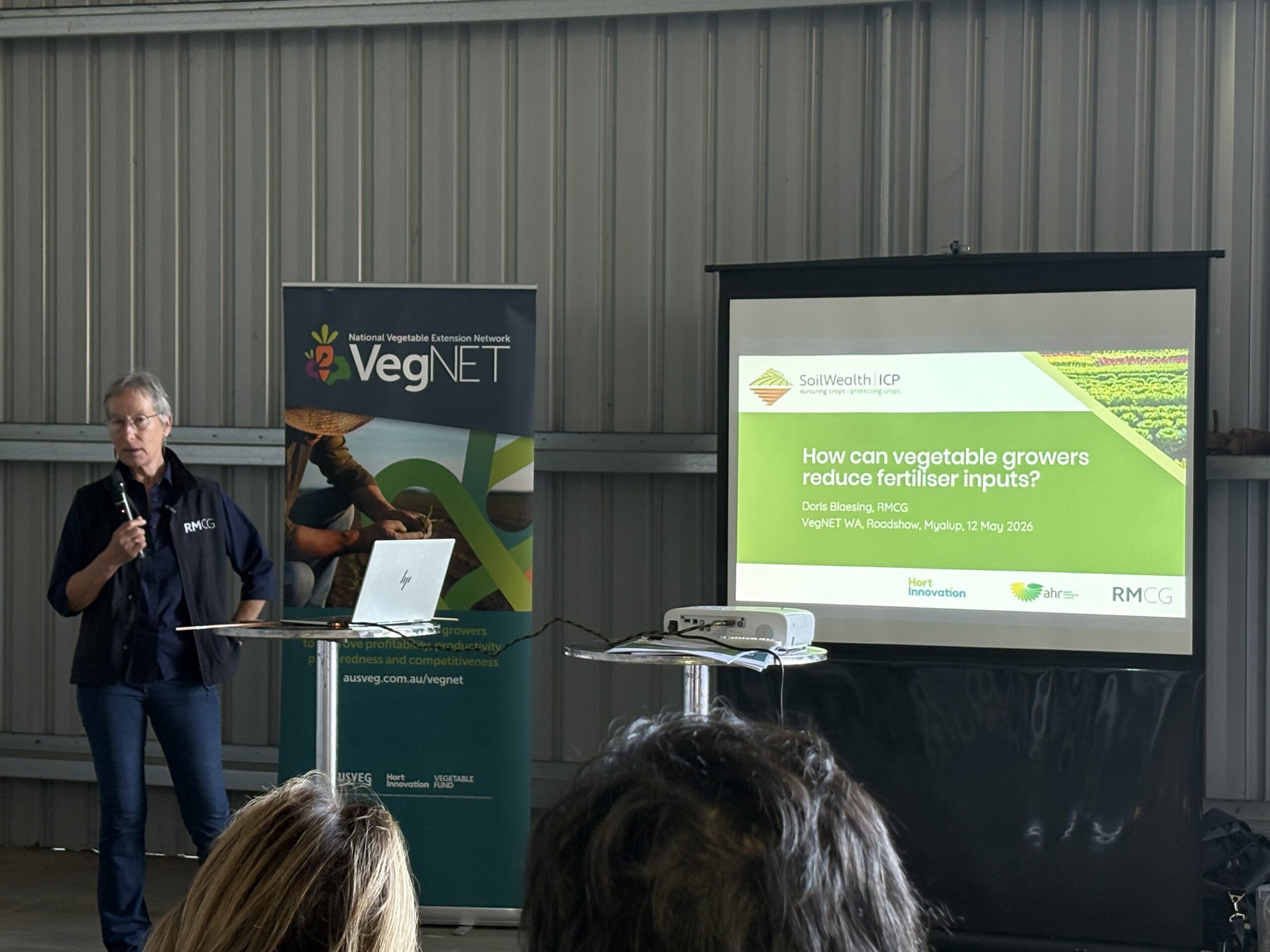
A highlight was presenting to more than 60 growers and industry members at the VegNET WA Roadshow at Galati Farm in Myalup. Doris discussed how growers can manage soils for resource use efficiency and shared advice on nutrient cycling and making the most of fertilisers. She highlighted that good agronomic practices are often the most efficient, saving on inputs and building soil health.
Some top tips included:
- Building and maintaining soil carbon to increase nutrient and water holding capacity
- Considering minimum or reduced tillage approaches to save on fuel and maintain soil carbon levels
- Only applying fertilisers in line with plant demand to prevent loss of nitrogen through leaching or off-gassing (volatilisation).
Demo site check in
While out west, the team caught up with our Carabooda demonstration site’s hydroponic cucumber growers, Doug Chamberlain and Peter Ruddle from Grown Smart Produce, to plan what’s next for the demo site.
Doug and Peter have hosted of our WA demonstration site for the past season, looking at maximising plant health and nutrient use efficiency. They shared their findings so far, and the team discussed improvements and next steps for the coming year. Read more about the demo site here.
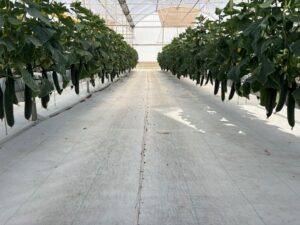
The nutrient adjustment trials didn’t pan out as expected. Still, it confirmed for Doug and Peter that they have a good base nutrient program in place. They plan to continue the nutrient trials, with a refined program tailored to the crop’s growth stage. The demo site hosts’ hope the next trial phase will help them achieve further improvements.
Key learnings from the previous phase include the importance of a high-quality substrate with low EC and the right particle size for the cucumber crop, the benefits of sterilising irrigation water to suppress disease, and the importance of defining their own target plant sap levels to achieve maximum productivity.
Grower visits
The Loose Leaf Lettuce Company
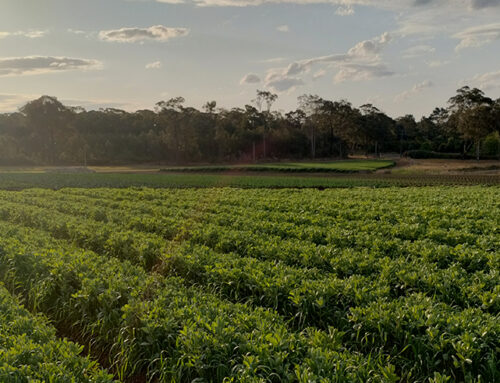
Located near Gingin, owned and managed by the Dobra family, the Loose Leaf Lettuce Company grows cut leaf baby greens and head lettuce. The company is as an outdoor hydroponic grower, given its deep sandy soil, which does not hold nutrients and organic matter well. To overcome nutrient management challenges associated with growing in sand, most fertiliser is applied via sprinkler fertigation. Solid fertilisers are applied in split applications as needed.
The production team faces extreme heat over the summer, which is alleviated by overhead irrigation.
The farm also runs two on-farm custom-made harvesters that operate on hydraulics, using a sawblade to cut lettuce above the soil surface. See the video of a harvester in action below.
The Three Ryans
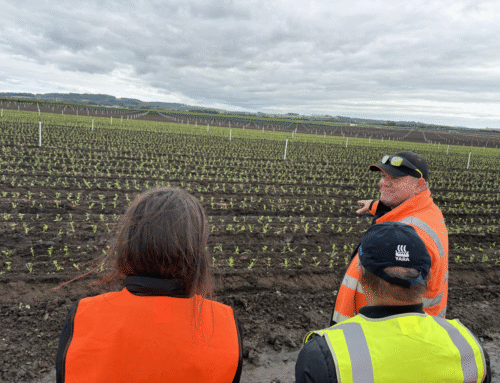
The Three Ryans farm in Manjimup, is owned and managed by Jake Ryan, along with his wife Sangeetha and his parents, Gary and Tracey. The 200-hectare property operates as a multi-generational family business specialising in regenerative agriculture, producing premium vegetables (cauliflower, broccoli, cabbage and kale), and livestock in a five-year rotation. Jake has worked with the Soil Wealth ICP team on cover cropping and strip tillage trials.
To comply with FreshCare certification standards, grazing is stopped 12 months before a paddock is returned to vegetable production. The pasture functions as a cover crop for that time.
The long pasture rotation phase provides a disease break for their brassica crops, while building soil structure, soil carbon and biology. When sowing their veggies again, the Ryans’ utilise strip tillage to maintain the soil health gains.
Until recently, pasture-raised laying hens were part of the mix. They were sold as a sperate business because looking after 4000 hens and their eggs had become too labour intensive for the already busy farm operation.
OpenWeedLocator (OWL) project
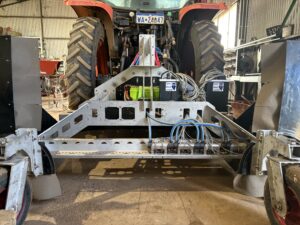
The OWL project is developing an open-source AI precision spot-spraying weeder system for vegetable crops. The project is a major grower-led initiative in Western Australia with support from the Warren Cauliflower Improvement Group in Manjimup, which includes Jake Ryan, VegNET WA and Dr Guy Coleman*.
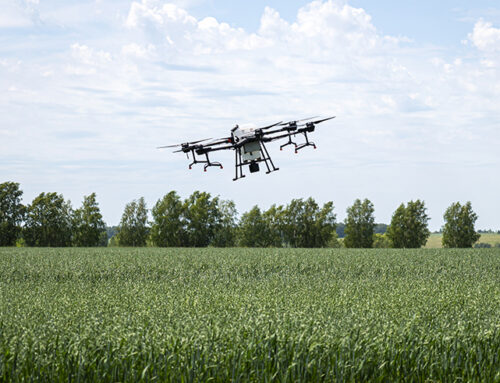
The system uses machine vision to identify and spot-spray weeds, enabling green-on-green (in-crop) and green-on-brown (fallow) control and reducing herbicide use. While currently in the development phase, the team plans to share the algorithm and machine designs for free, enabling any vegetable grower in Australia to access the system and pay only for materials and construction, which can be done on farm from available parts. This open approach will enable the OWL system to be highly customisable and repairable, with local fabricators and IT companies able to conduct work as needed.
Access more information on the OWL project, software and community below:
- VegNET WA: OWL project update– learn more about the project, trials and how to get involved
- CSIRO OpenWeedLocator study – access background information on how the hardware and colour-based algorithms were validated in field settings
- OpenWeedLocator GitHub repository – access the project’s source code, software API and blueprints
- OpenWeedLocator Community – join the forum
* Dr Guy Coleman is an award-winning Western Australian ag-tech innovator and precision weed control scientist. He is best known for developing the OpenWeedLocator (OWL), an open-source, low-cost DIY weed detection system that helps farmers precision-spray weeds, saving money and reducing chemical use. Now based in Copenhagen, Guy is assisting the Three Ryans to get the OWL into action on their farm and is keen to support other growers to do the same.