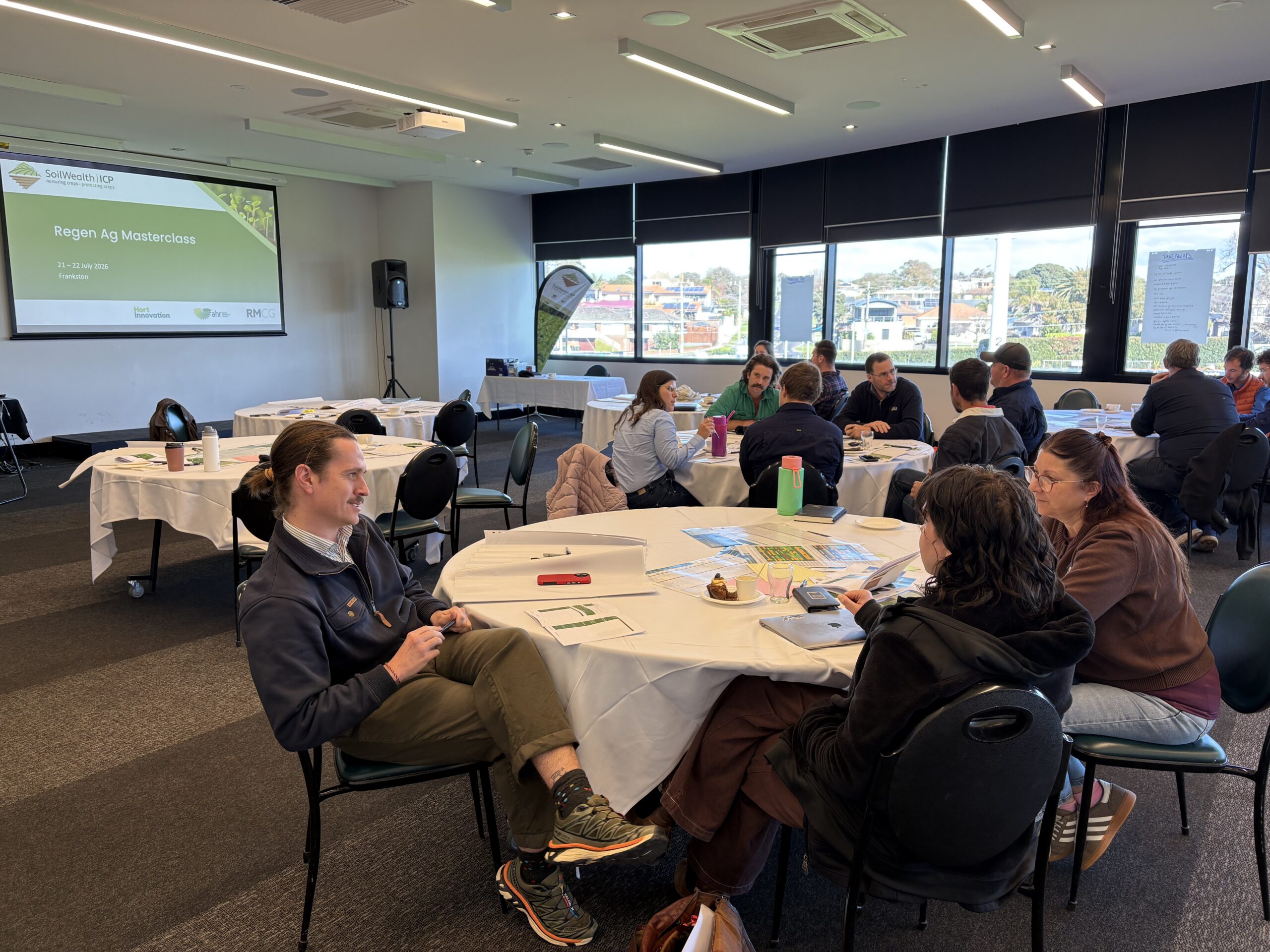
Over two days in mid-July, a group of leading growers and advisors gathered in Frankston, Victoria, for a two-day masterclass to deepen their understanding and share their practices in regenerative agriculture (regen ag) in annual vegetable systems.
Throughout the masterclass, participants shared their knowledge on regen ag, heard from the Soil Wealth ICP team about the science behind the principles, visited two leading vegetable farms, got an international perspective on regen ag in vegetable crops and left with a plan to implement new practices.
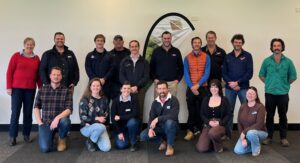
Regen ag masterclass participants and Soil Wealth ICP team members.
Day one kicked off with answering a key question: what is regen ag and how does it apply to annual horticulture? In short, it’s about good agronomic practices which are contextual to local conditions and have a long-term focus on building system and soil health.
The team took participants through the principles of the Regen Ag Toolbox and highlighted some key practices which can have the biggest impact on-farm. The discussion ranged from the importance of living roots and organic carbon in driving soil biological function; the use of cover crops to build soil structure, fix and retain nitrogen, and suppress weeds; strategies to reduce synthetic inputs; and the importance of on-farm diversity for integrated crop protection and soil health. To demonstrate the good agronomic practices that regen can be, and to put these lessons in practice, the team shared insights from the Soil Wealth ICP’s Tarwin, Oakdale, Virginia, Bundaberg and Manjimup demo sites.
Key takeaways from this session focused on cover cropping, nitrogen fixation, and cover crop termination. Key tips when using cover crops included:
- Have a clear goal in mind for why you want to use cover crops, as this will help determine what species you use
- Keep it simple, especially if you’re just starting, using just one to two species
- Pre-plan your termination method
- If you’re aiming to fix nitrogen with legumes, combine a grass and a legume together. The grass will scavenge any nitrogen left in the soil, forcing the pea to fix its own.
Farm visits
Peter Schreurs & Sons
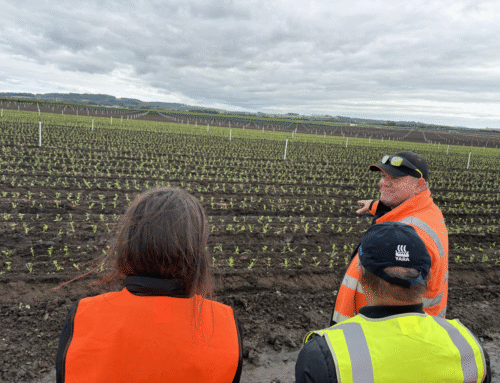
Mark Schreurs is a second-generation grower at Peter Schreurs & Sons, growing leeks, radicchio, baby cos, baby wombok and kohlrabi. This variety of crops is grown on the sandy coastal soils of the Mornington Peninsula, and the farm uses large quantities of compost to build nutrients and the water-holding capacity of the soils.
Mark moved towards regenerative practices after realising that the more insecticides that are sprayed, the more you have to keep spraying for pests. The farm now grows its leek crop without using insecticides and fungicides, thanks to a diverse crop rotation, strong integrated pest management practices and a healthy soil ecosystem.
Mark’s approach to regen ag on farm relates to four key principles:
- Keep living roots in the ground for as long as possible
- Foster biodiversity on-farm, including crop diversity, native plantings and shelter belts, and multi-species cover crops
- Minimise soil disturbance, including chemical disturbance
- Armour the ground by keeping it covered.
While Mark makes farm management decisions through his four principles for regen ag, he reflected that “regen farming is between the ears – it’s about mindset”. While the practices can be straightforward, changing the minds and practices of staff can be the biggest challenge.
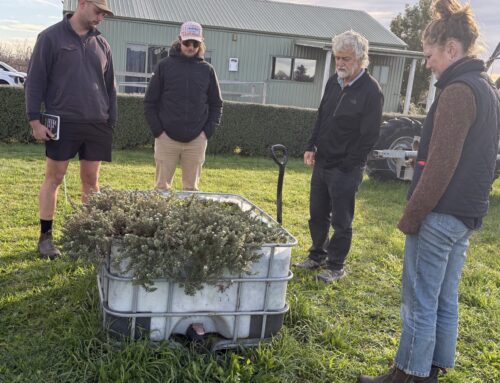
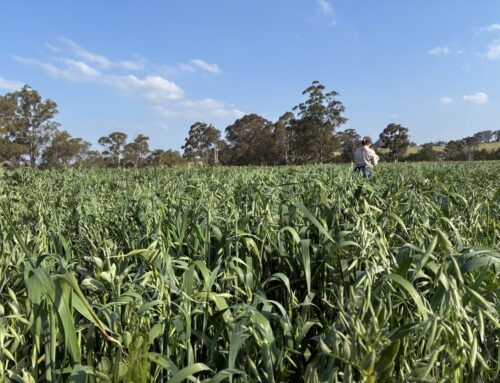
Mark also uses multi-species cover crops, growing grasses, peas and radishes. He uses roller crimping to push the cover further and using it early helps to push down the biomass, allowing other species to grow and support fungi in the soil.
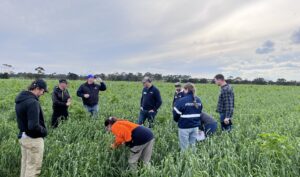
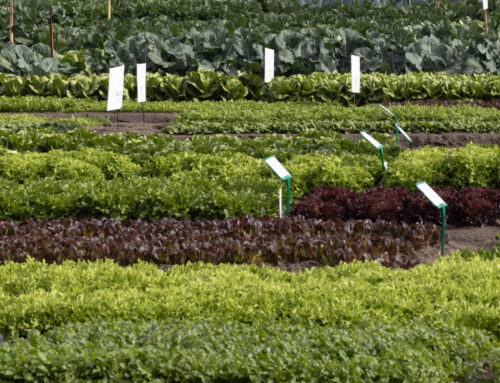
Masterclass participants examining a cover crop at Peter Schreurs & Sons.
Peninsula Fresh Organics
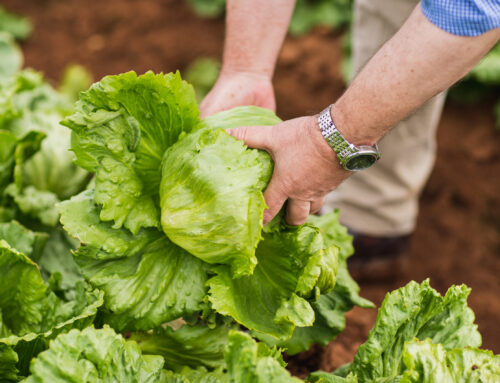
Peninsula Fresh, owned and operated by Wayne and Tash Shields, has grown certified organic produce for 15 years and now operates across three sites and more than 125 ha. The farm produces over 20 vegetables, including radish, Asian greens, leeks, lettuce and broccoli.
Wayne has seen the biggest impact of regen ag through “saving money on production, keeping you in business and helping you grow a better product”. While the pre-farm gate benefits are clear to the team at Peninsula Fresh, Wayne notes consumers and markets are still unsure about what regen ag is, meaning regen produce isn’t attracting a price premium similar to organics. To access the market premium, the team believes that demonstrating improved nutrient density and shelf life of regen produce is needed, along with a robust, third-party certification scheme to provide clarity in a confused market.
Dan Hodges, lead for research and nutrition at Peninsula Fresh, has been driving innovation on-farm using bioferts – farm-made biostimulants and chelated nutrients. The bioferts work by having ‘biology feed biology’, with the microbial necromass produced during the fermentation process acting as food for the biology present in the soil. The nutrients added to the biofert brews, through rock dust, manure and seaweed, are chelated, or captured in carbon bonds, converting the nutrients into forms more readily accessed by plant roots and leaves. Importantly, these products are stabilised and food safe by dropping the pH to 3.5-4.5, with food safety confirmed via lab testing.
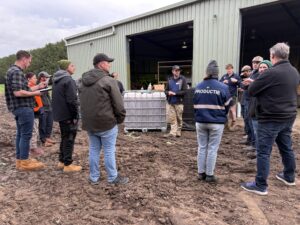
Participants learning about biofert at Peninsula Fresh Organics.
International perspective on regen ag
Tika Schellevis from McCain also presented on the international work in regen ag that the company is undertaking. McCain has defined six principles of regen ag:
- Ensure farm resilience (including economic resilience)
- Armour soils, preferably with living plants
- Enhance crop and ecosystem diversity
- Minimise soil disturbance
- Reduce agro-chemical impact and optimise water use
- Integrate organic and livestock elements.
The company has identified a range of practices and key performance indicators for each principle. Importantly, the focus is on outcomes rather than practices, allowing growers to adapt the principles to local conditions. Compared to international growers, Australia is leading in our soil health practices, keeping the soil armoured and minimising soil disturbance.
Key takeaways
The masterclass reinforced that regen ag is not a fixed methodology but a toolbox of practices that should be adapted to each farm, crop and business. As with any new practice, start with a clear goal, trial changes at a manageable scale, monitor the results, and refine and integrate into your system. When done well and grounded in science-based practice, regen ag has the potential to save money, improve soil health and produce better food.