
A collaborative demonstration trial underway in Moorland, near Bundaberg, Queensland, is continuing to explore how real-time monitoring and refined management practices can improve water and fertiliser use efficiency in capsicum crops without sacrificing productivity or quality.
Now in its second season, the trial, hosted by local grower Trevor Cross, builds on key findings from the 2024 season and remains focused on aligning input use more closely with crop demand to help growers manage rising input costs, improve sustainability, and maintain strong crop performance.
A practical, whole-of-block approach to on-farm innovation
Unlike conventional trials that test control and treatment plots side by side, this demonstration applies best practice management across a single commercial block. The emphasis is on real-time adaptation of fertiliser and irrigation strategies, guided by weekly monitoring, data analysis, and close collaboration between the grower and the project team.
“This approach is very much about supporting Trevor and his team to adapt current practices using the latest data and a strong understanding of crop needs,” Soil Wealth ICP team member Dr Naomi Diplock said.
“We really want this to be practical, responsive, and grower-led.”
This demonstration trial specifically seeks to answer one core question:
How can growers better match their water and nutrient applications to the actual needs of the crop, in real time, using the tools and information available?
Trial objectives
The demonstration is designed to help fine-tune management practices that:
- Align nutrient supply more closely with crop uptake
- Optimise irrigation timing, volume and frequency
- Reduce input costs related to fertiliser, water, energy and labour
- Improve the efficiency of fertigation events
- Evaluate the impact of these refinements on yield, crop quality and sustainability.
Trial setup
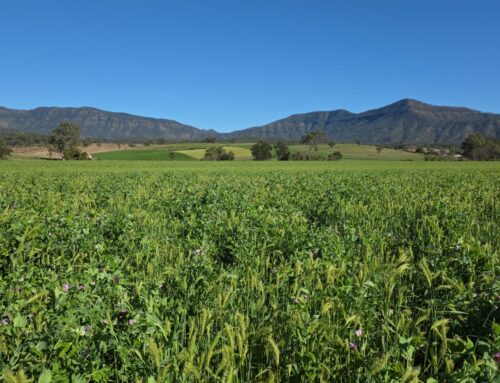
The trial is situated on sandy soils typical of the region, using raised beds covered in black plastic mulch which follow the grower’s standard practice.
Technology and monitoring
The trial incorporates a variety of monitoring tools and data collection methods to guide decision-making.
Three Wildeye soil moisture probes, installed at a depth of 60 cm, will track changes in root zone moisture, while a HOBO rain gauge records rainfall to help refine irrigation schedules.
Regular testing plays a key role in this project, with weekly tissue and sap samples assessing nutrient uptake, and soil tests conducted before planting and after harvest to monitor nutrient movement and balance.
All irrigation and fertiliser applications will be carefully reviewed and recorded, with required adjustments discussed with Trevor to support nutrient budgeting and timing.
The team will assess yield and quality at harvest; fruit nutrient analysis will help to quantify nutrient removal from the field. Together, these measurements allow the team to pinpoint under- or over-watering events, evaluate fertigation effectiveness, and fine-tune irrigation volumes and timing to match crop stage and root zone needs.
“Together this data helps the team identify under- or over-watering events and evaluate the effectiveness of fertigation,” Naomi said.
“We can then adjust scheduling or volumes based on these results.”
Nutrient management refinements
One of the trial’s key focuses is refining nitrogen management to optimise plant health and reduce potential disease risks. This season includes several adjustments:
- Exploring alternative nitrogen sources
- Adjusting base fertiliser rates based on pre-plant soil tests
- Using sap and tissue testing to guide in-season fertigation decisions
- Considering additional limitations that may impact nutrient availability
A nutrient budget is also being developed to ensure fertiliser applications are tailored to expected crop yield and specific crop uptake patterns.
Weekly management
Throughout the trial, the Soil Wealth ICP team will visit weekly to check in on the site and keep everything on track. These visits are a chance to see how soil moisture and irrigation are performing, talk through nutrient needs based on sap and tissue tests, and make any fine-tuning to irrigation or fertigation schedules. They also help Trevor and his team spot any early signs of pests or disease, ensure the trial stays on protocol, and capture valuable observations in real time.
This collaborative approach means that adjustments can be made quickly and with confidence, based on real data rather than assumptions.
The outcomes of the trial will be shared with industry through case studies, articles, and regional extension events as part of the Soil Wealth ICP project.