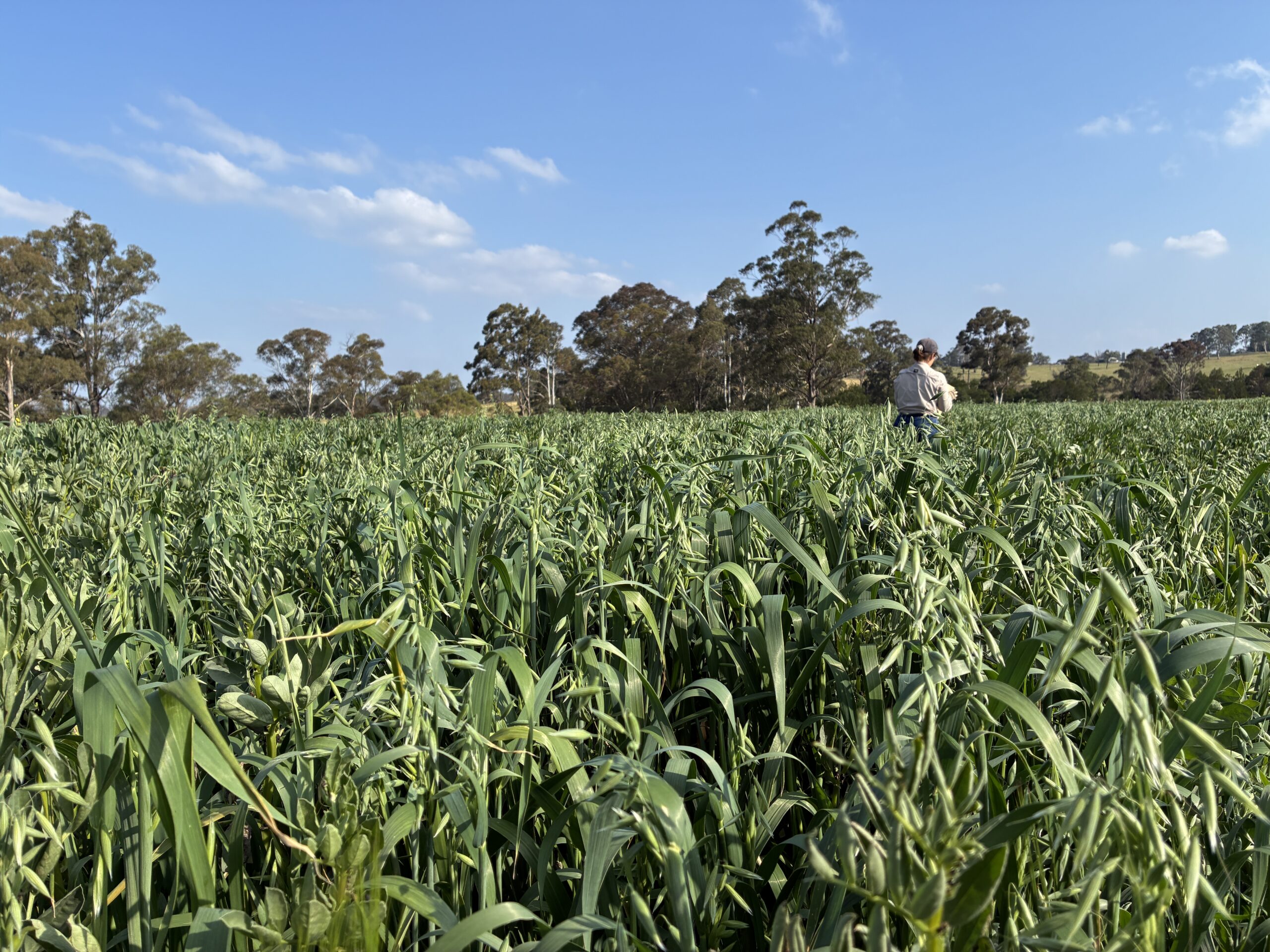
The Soil Wealth ICP team is back at Phil Bartolo’s farm in Oakdale, NSW, with a new trial building on the 2024–2025 work work on optimising legume cover crops for nitrogen supply to cabbage (read the previous case study here (Soil health and nutrient management at the Oakdale demonstration site – Soil Wealth ICP).
This earlier trial found that faba bean + oat cover crop captured around 250 kg N/ha. However, after the residue was left on the soil surface for six months, soil nitrogen had fallen back to very low levels by the time the cabbages went in. This suggested that much of the nitrogen released from the residue may have been immobilised or lost before the crop could use it.
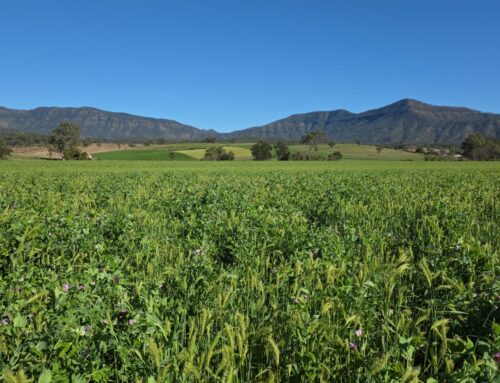
Phil has since changed his approach: he now mulches the cover crop and works it into the soil closer to planting. The new trial will test whether the timing of incorporation can better match nitrogen release with cabbage demand. This season’s faba bean and oat cover crop was mulched in late September and will be incorporated at three different times, two weeks apart. This will give the residues different amounts of time, roughly two to three months, to break down before cabbages are planted in late December.
The aim is to find the incorporation timing that best matches nitrogen release from cover crops to the cabbage crop’s needs, with the potential to reduce nitrogen fertiliser use. Three incorporation timings will be trialled: 11, 9 and 7 weeks before cabbage transplanting. Soil testing will track nitrogen availability following incorporation, while sap testing and crop physiology assessments throughout the growing season will monitor nitrogen uptake and crop performance. Yield assessments will also be conducted at harvest. Results are expected in autumn 2027.
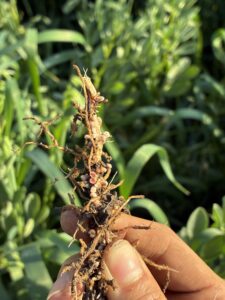
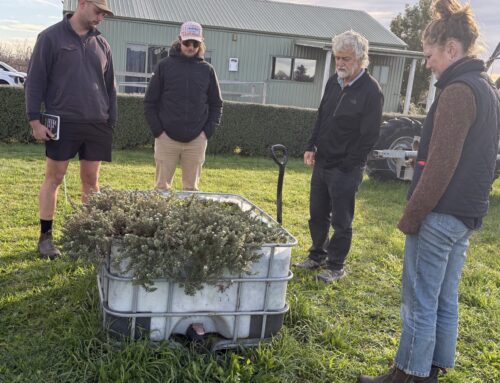
Last week, the team visited the farm to take soil and biomass samples, and assess faba bean nodulation. The nodulation test found that Phil’s faba beans had red nodules inside (pictured), indicating active nitrogen fixation by Rhizobia.