
It’s been a busy few months at the Oakdale demonstration site, which aims to explore how legumes can be effectively used to supply nitrogen to a brassica crop.
Steph Tabone (Soil Wealth ICP/AHR) who is leading trials at this site with grower Phil Bartolo, is putting theory into practice to test whether it is possible to align the nitrogen release from cover crops with the crop’s nitrogen demands.
“This trial combines many things, including cover crop management, termination methods, and soil preparation with the aim of optimising nitrogen cycling, and reducing inputs,” Steph said.
Overview and objectives
At the Oakdale site, the team has been testing three cover crop treatments – straight oats, a mix of oats and faba beans, and a bare fallow control.
Cover crops were terminated using a combination of herbicide at the flowering stage and rolling/crimping down of the biomass.
To prepare the beds to the brassica cash crop, three approaches have been tested:
- Speed discing
- Strip rotary hoeing
- Full rotary hoeing, with full rotary hoeing serving as the control.
These methods were selected to balance the goals of reduced tillage to support soil health, while providing practical benefits for the grower, including time savings, lower diesel use, reduced spraying for weeds, and decreased tractor maintenance costs.
Seven treatments are being tested:
- Fallow + speed disc (control)
- Faba and oat cover crop + speed disc
- Faba and oat cover crop + strip rotary hoe
- Faba and oat cover crop + full rotary hoe
- Oat cover crop + speed disc
- Oat cover crop + strip rotary hoe
- Oat cover crop + full rotary hoe
Trial activities to date
Activities at the Oakdale demonstration site began in May 2024, with soil nutrient and biology assessed prior to planting the cover crops in August 2024. Biomass assessments of the cover crops were conducted in November 2024, followed by termination of the cover crops in December 2024 using a combination of roller crimping and herbicide application.
Soil available nitrogen (ammonium and nitrate) was monitored throughout the year to track changes as cover crop residues decomposed. Above-ground cover crop residues were also measured for quantity and quality during the same periods to investigate residue breakdown over time.
In June 2025, soil was prepared using the three different bed preparation methods, with reduced-tillage approaches such as the speed disc and strip rotary hoe offering faster tractor operation and lower input costs compared to full rotary hoeing. Cabbage was transplanted into the prepared beds soon after.
Further soil assessments conducted mid-year measured soil hardness, water infiltration, and bulk density at 10cm and 30cm depths.
Cabbage tissue testing in September 2025 monitored nutrient status, with a focus on nitrogen, alongside measurements of soil water infiltration. Post-harvest soil tests and crop yield data were collected in mid-November 2025.
Fertiliser was applied following the grower’s standard practice, with a base application at planting, and side dressing at five weeks after transplanting and again at the pre-heading stage.
Early results and insights
Cover crop performance
Before termination, the faba bean and oat mix contained 217 kg N/ha in above-ground biomass, while straight oats held 156 kg N/ha. Following termination, soil available nitrogen ranged from 17-24 kg N/ha across the treatments in December 2024, but decreased to 5-7.5 kg N/ha by May 2025, six months after residues were left on the surface.
Cover crop residue biomass and nitrogen content declined significantly over this period.
The cabbage crop
The cabbage crop performed very well across all treatments, with only subtle visual differences.
Tissue testing at the pre-cupping growth stage indicated adequate nitrogen levels in all treatments, although slightly lower total nitrogen was observed in cabbages planted into strip rotary hoe beds.
Yield data were relatively consistent, with the highest average head weights recorded in the faba-oat cover crop planted on speed-disc-prepared beds.
Cost and efficiency gains
While crop performance and yield were similar across treatments, the greatest benefits have come from reducing tillage through speed disc use. This method has saved time, reduced diesel consumption, and decreased tractor wear compared to conventional rotary hoeing.
Using cover crops and terminating them with roller crimping (leaving residues on the surface) has also reduced the grower’s herbicide use by 50%, as cover crops suppressed weeds and reduced tillage minimised soil disturbance, limiting weed seed germination.
Nitrogen dynamics and other lessons
Monitoring nitrogen levels after roller crimping showed a gradual decline in soil and residue nitrogen between December 2024 and cabbage planting in June 2025. In response, grower Phil has experimented with mulching and incorporating cover crop residues 4-8 weeks before planting, rather than leaving residues on the surface for 6-12 months, to better optimise nitrogen.
Early attempts highlighted challenges incorporating the high biomass using a speed disc, prompting adjustments. Residues are now mulched, left to decompose slightly, then incorporated.
The next steps will involve optimising the timing of mulching, incorporation, and planting to further improve nitrogen use efficiency.
“Once this is better understood, we can perhaps reduce base fertiliser nitrogen to account for nitrogen supplied by legume cover crops,” Steph said.
“A full analysis of soil hardness, bulk density, water infiltration, crop yield, and economic outcomes is currently underway.
“We look forward to getting a clearer picture of what is working best for the grower, including an economic and soil health analysis.”
An in-depth case study will be prepared and published on the Soil Wealth ICP website, providing further insights and recommendations for growers.

Bulk density assessments in March 2025.

Cover crop residues – faba bean and oats (left), fallow (middle) and oats (right) in May 2025.

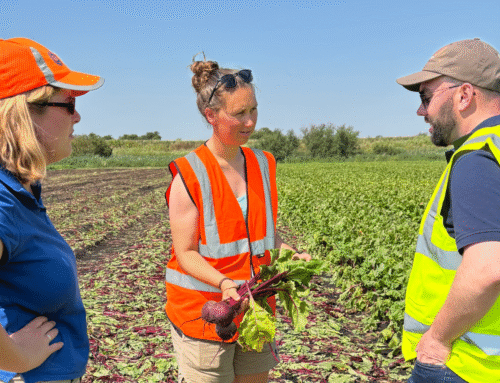
Inspecting crop roots in September 2025.
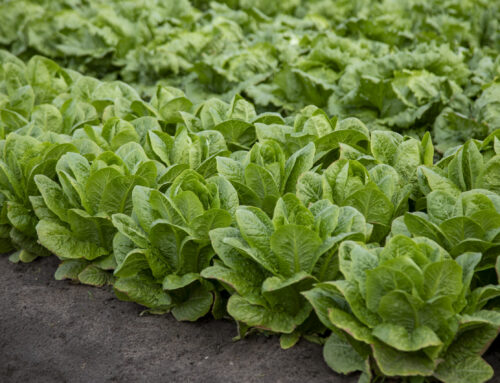
Title image: Cabbage under faba oat full rotary hoe treatment in July 2025.
Acknowledgements
The team extends their thanks to grower Phil Bartolo for his engagement and ongoing efforts to host the demonstration site.