
The Soil Wealth ICP team has been busy in the field over the past few weeks, working with growers and project partners across several regions to monitor trials, install new equipment, and progress research activities.
Oakdale, NSW – Soil moisture monitoring in cabbage
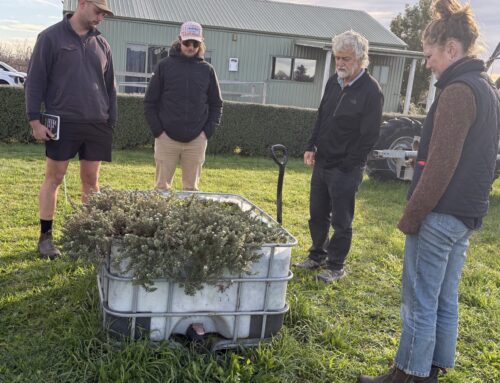
Steph Tabone (AHR) recently wrapped up the legume nitrogen trial with a visit to the Oakdale demonstration site. And while the trial may be complete, the focus on improving soil health and water efficiency continues.
Grower Phil Bartolo is turning his attention to refining his cover cropping strategy, experimenting with how different species might serve specific purposes and at different times.
Phil is also exploring how soil moisture monitoring can guide irrigation decisions in his current cabbage crop. A soil moisture sensor has been installed at a site, with the location carefully chosen to represent average paddock conditions (away from sprinklers, slopes, and low-lying spots, to ensure reliable readings).
For Phil, this marks a new chapter in crop management. Having relied on the ‘feel’ of the soil for years, he’s now combining that hands-on experience with real-time data.
Steph and the team will visit regularly to review the sensor readings together, translating the numbers into practical irrigation insights.
Stay tuned for a case study coming soon.
Local Land Services, Richmond (NSW) – Cover crops and reduced tillage cabbage trial
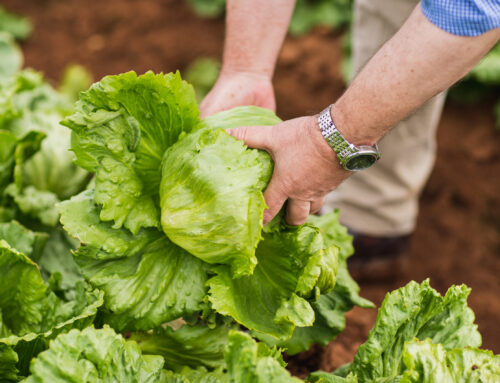
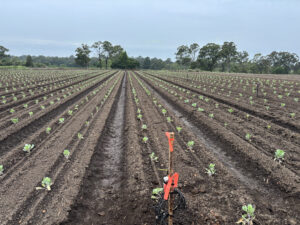
Meanwhile Umberto Calvo (AHR) was out at the Local Land Services (LLS) demonstration site in NSW where cabbage seedlings have just been transplanted.
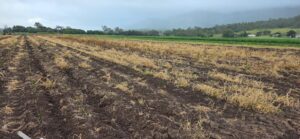
At this site, the cereal rye cover crop was terminated at the end of October and left on the soil surface over summer. Two different approaches were used across the bays: one was mowed several times, while the other was sprayed and rolled. A chemical fallow treatment represents the control or standard practice.
Ahead of planting, the paddock was sprayed to control weeds and fertiliser was applied. The reduced tillage section was then strip-tilled, while the conventional section was fully rotary hoed before transplanting the cabbage seedlings.
The team is planning a field day at the site in May, where growers will have the opportunity to see the trial and discuss early observations.
The exact date is still to be confirmed – follow us on LinkedIn or Facebook for details as they are announced.
Lockyer Valley, QLD – Sweet corn trial underway
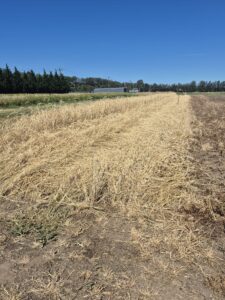
At the Mulgowie demonstration site in the Lockyer Valley, the sweet corn crop was planted in late February after several months of delays due to ongoing rainfall.
This trial follows a winter 2025 cover crop consisting of field pea and barley. The cover crop was terminated at flowering in spring using three different methods, which are being compared with a fallow control: Buffalo rolling stalk chopper, mulching, and harvest for livestock forage.
Throughout the cover crop phase, the team monitored both quantity (t/ha) and quality, including total carbon, total nitrogen and C ratio. Soil available nitrogen has also been measured monthly from the time of cover crop planting through to the present. In addition, Haney soil tests were conducted at key stages.
The next steps will involve monitoring the corn crop across treatments using tissue testing to assess nitrogen uptake. The crop will be followed through to harvest, where yield and quality will be assessed, alongside an economic analysis of the different management strategies.
The Mulgowie site has partnered with the SWICP team over many years and their findings and insights is being explored in an upcoming longitudinal case study. Again, stay tuned!
Bowen, QLD – Multi-species cover crop success
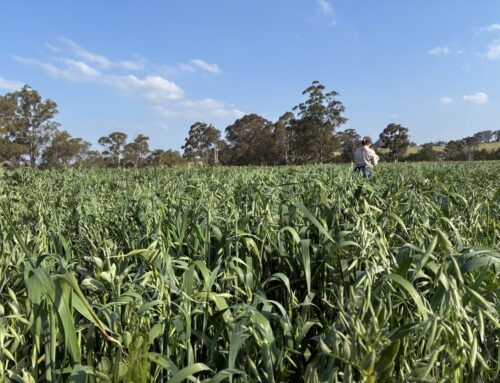
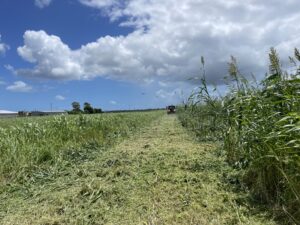
Further north in the Bowen heat, Sophia Thach (AHR) has been monitoring a multi-species cover crop trial at one of the newer SWICP demo sites. The mix included sorghum, sunn hemp, millet, field radish and sunflower. The crop was rainfed and performed well over summer, with sorghum and sunn hemp emerging as the dominant and strongest-growing species.
Encouragingly, there was very little weed pressure throughout the growing period.
A range of data were collected during the recent trip, including cover crop biomass, water infiltration rates, soil biology and soil chemical samples, as well as soil stability tests. Part of the block has now been terminated using mulching, allowing the team to begin assessing how the cover crop residues influence the following crop and soil conditions.
As always, the team are very grateful to all the host growers and their teams for their ongoing support of the demonstration sites.