Timing nitrogen release from cover crop residues is a key challenge for vegetable growers looking to reduce fertiliser inputs while maintaining productivity.
Over the past four years, the Soil Wealth ICP team has worked with The Mulgowie Farming Company in the Lockyer Valley to explore how different cover crop termination strategies influence nitrogen availability and crop performance in sweet corn.
Improving this synchronisation could help reduce reliance on synthetic fertiliser while maintaining yields.
Trial objectives
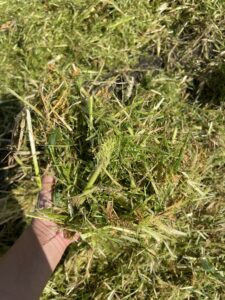
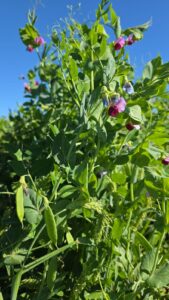
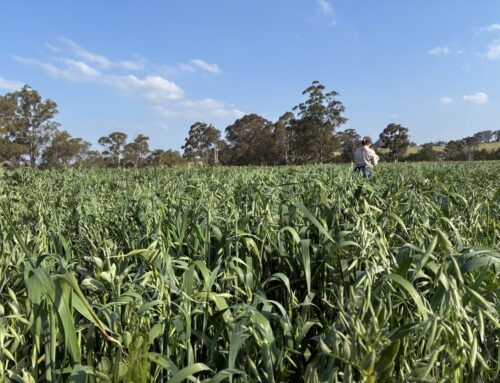
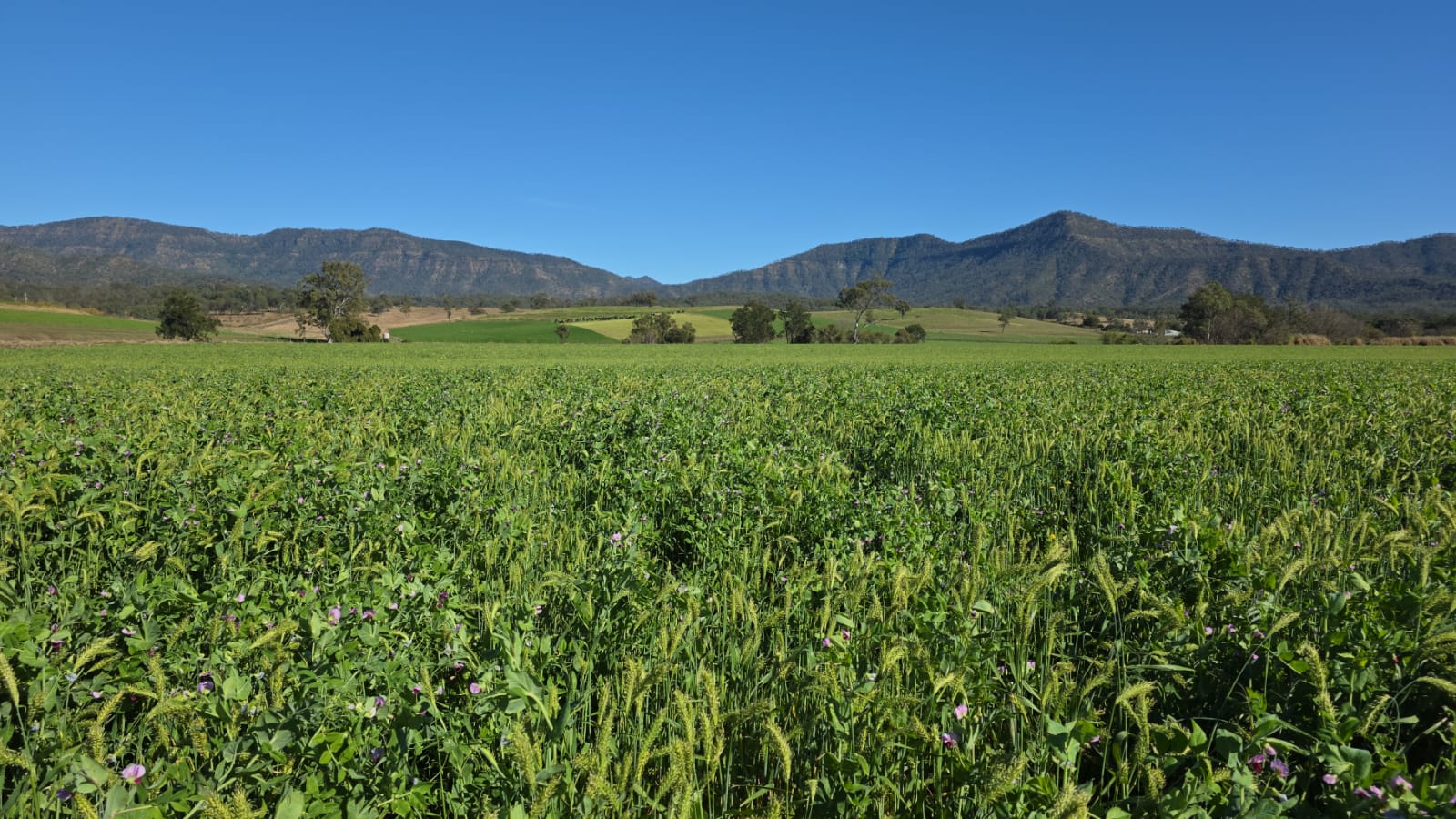
The latest demonstration trial focuses on a mixed winter cover crop of forage barley and field pea, established to build biomass and contribute biologically-fixed nitrogen to the system. By comparing several termination methods, the project is examining how management decisions influence residue breakdown, nitrogen release and ultimately sweet corn productivity.
Soil Wealth ICP and AHR team member Steph Tabone, who explored this topic extensively during her Nuffield Scholarship in 2024-25, has been working with Mulgowie on their cover crop goals for the past few years.
“With this demonstration, we are really trying to identify termination approaches that best align nitrogen release from the cover crop with the nutrient needs of the following sweet corn crop,” Steph said.
The team is also investigating the impact of removing cover crop biomass for forage.
“While harvesting provides an additional income stream, it also removes nutrients from the soil and leads to more traffic, which can cause compaction,” Steph said.
“Understanding how this affects soil fertility and crop performance will help growers weigh the trade-offs between forage production and soil health benefits.”
Treatments being compared
Several treatments are being evaluated across the trial site, including a fallow plot that acts as a control, both with and without nitrogen fertiliser applied to the corn crop.
Other treatments involve growing a mixed cover crop of forage barley and field pea and terminating it using different methods before planting sweet corn.
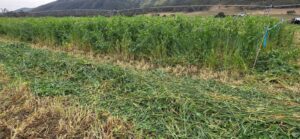
Termination approaches include harvesting the cover crop for forage, using a buffalo rolling stalk chopper to flatten and terminate the crop, and mulching the cover crop and leaving the residue on the soil surface. Each treatment is also tested with and without nitrogen fertiliser applied to the subsequent corn crop, allowing the assessment of how effectively the cover crop has supplied nitrogen to the corn crop.
The cover crop was sown in April 2025 at a rate of 30kg/ha for both forage barley and field pea, while a fallow area was left untreated as a control.
As the crop matured, one treatment was harvested for forage in August 2025, while the remaining plots were terminated in early September using either a rolling stalk chopper or mulching equipment.
Following termination, the site was prepared for the sweet corn crop in December 2025, with compost applied ahead of planting. However, ongoing rainfall delayed planting until 26 February 2026, when the sweet corn crop was finally established.
Monitoring and assessments
A range of measurements have been taken throughout the trial to understand how treatments influence soil nutrients and crop performance. Soil testing has been conducted monthly to monitor available nitrogen and other soil parameters during key stages of the trial.
Before termination, the cover crop was also assessed for biomass production and residue quality. Measurements included dry matter yield as well as carbon and nitrogen concentrations to determine the carbon-to-nitrogen ratio, an important factor influencing residue breakdown and nutrient release.
Sweet corn tissue tests were also conducted at the V4-V5 growth stage, focusing on leaf nitrogen percentage, nitrate and ammonium levels, along with other key nutrients in selected treatments.
Early observations
Preliminary measurements show strong biomass production from the cover crop. Areas harvested for forage produced 8.2 tonnes of dry matter per hectare, consisting of approximately 24% field pea and 76% barley.
Plots terminated by mulching or using the rolling stalk chopper produced slightly higher biomass levels, returning around 9.7 tonnes of dry matter per hectare. These residues contained a greater proportion of field pea (38%), with barley making up the remaining 62%.
Nitrogen accumulation in the field pea component also increased significantly as the crop matured, a result of growing more biomass. In August 2025, field pea nitrogen was measured at around 70kg N/ha, rising to approximately 118kg N/ha by September.
Next steps
The trial will be harvested in late April 2026 ahead of the commercial sweet corn harvest. Final assessments will include cob yield, cob quality and post-harvest soil testing to evaluate how the different treatments affected crop productivity and soil nutrient levels.
The results will provide practical insights for vegetable growers looking to better manage cover crop residues.
Join us on site
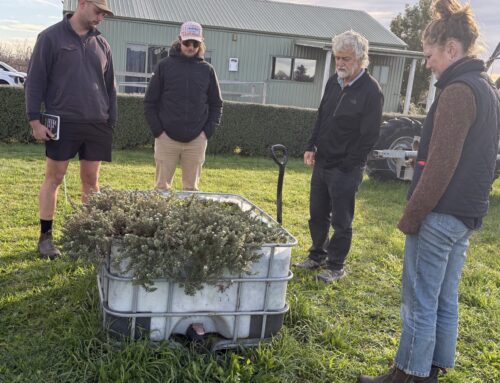
Growers and industry members will also have the opportunity to learn more about the project at an upcoming (13 April 2026) workshop and field walk featuring soil specialist Joel Williams.