Soil Wealth ICP demonstration site hosts Andrew and Zurri Braham, and their son Evan, have started a new phase of their banker plant trials, planting a native insectary outside their capsicum greenhouses in Virginia, South Australia. The long term aim of the trial is to suppress pests on the farm before they enter the greenhouses.
This new phase will run alongside the current banker plant demonstration, which is now trialling two different plants: Verbena (Verbena cv.) and its potential to support Orius (Orius tantillus); and a cereal aphid banker to support aphid parasitoids already released. A new beneficial, Nesidiocoris (Nesidiocoris tenuis), will also be trialled and released into banker plants near the entrances of the greenhouses.
The demo site continues to be delivered in partnership with Dr Anita Marquart from Biological Services.
Why native insectaries?
Native insectaries are plantings of indigenous (native to the area) flowering perennials. These insectaries aim to boost beneficial insect populations by providing floral resources that attract and keep them in the area. Insectaries aim to provide a full floral calendar, meaning at least one plant species will always be in flower, ensuring a consistent supply of pollen and nectar to keep the beneficials fed. Planting perennials native to the area ensures these insectaries will have low maintenance requirements once established, as they have evolved to local conditions.
At Braham Produce, two small insectary patches were established, initially to see which beneficials the insectaries support, how they flower and establish under local conditions, and whether pest populations increase with the strips. Given pressure from Western Flower Thrips (WFT) and Tomato Spotted Wilt Virus (TSWV), work will be undertaken to determine whether the insectaries host the pest and the virus.
The species being trialled for the insectaries are:
- Native fuchsia (Correa reflexa)
- Spiny saltbush (Rhagodia spinescens)
- Common wallaby grass (Rytidosperma caespitosum)
- Cut-leaf daisies (Brachyscome multifida)
- Woolly New Holland daisies (Vittadinia gracilis)
- Giant New Holland daisies (Vittadinia megacephala)
- Woolly tea tree (Leptospermum lanigerum)
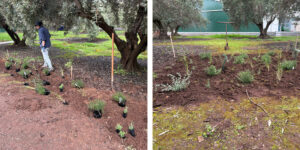
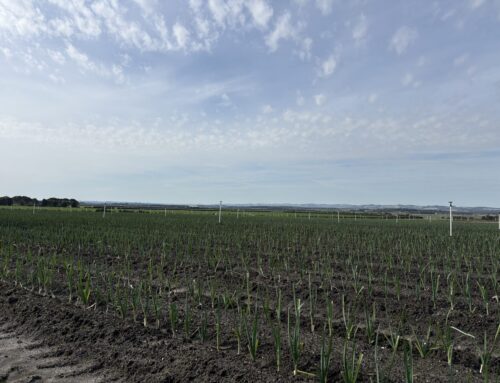
Native insectary patches established at Braham Produce.
Banker plant trial expands
Given the promise shown by the Alyssum bankers in the demonstration site trial at Braham Produce, they were unable to support Orius over the season. Orius populations declined in the Alyssums over summer, and thrips numbers increased, leading to an increase in TSWV towards the end of the season. To overcome these limitations, a new species, Verbena, will be trialled in the 2026/27 season to assess its potential as a banker plant for Orius.
Alongside the Orius trials, a second banker plant trial will run in a separate greenhouse with a different beneficial insect, Nesidiocoris, commonly used in tomato IPM. Nesidiocoris is a predatory bug, mostly used for the control of whitefly, but can also provide excellent thrip control. However, Nesidiocoris can also feed on plant tissue, and regular monitoring is needed to ensure populations do not become too high and damage the capsicum crop.
The final banker plant trial for the 2026/27 season aims to establish and build up Aphidius (Aphidius colemani) populations, using a cereal aphid banker, before any aphid outbreaks occur.
Aphidius is a parasitoid wasp that lays its eggs in aphids, killing them, and is already used at Braham Produce. These effective aphid hunters consume nectar and pollen as adults but need egg-laying sites (aphids) to continue reproducing. Wasp populations can reproduce easily during active aphid outbreaks, but once aphids are controlled, populations can crash or struggle to establish. To overcome this, cereal aphid banker plants can be used.
These banker plants are barley plants inoculated with grain aphids (Rhopalosiphum padi), which do not infect broadleaf crops, including capsicums. This provides Aphidius with a continuous supply of hosts, allowing populations to establish early and continue reproducing even when pest aphid numbers in the crop are low. The aim is to maintain sufficient Aphidius numbers throughout the season to suppress pest aphids before they develop into outbreaks and reduce the need for additional releases.
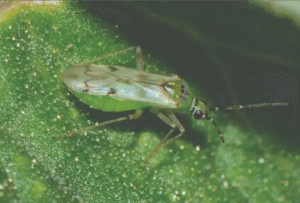
Nesidiocoris (Nesidiocoris tenuis), a beneficial used to control whiteflies and other small pests. Photo credit: Biological Services.
Learn more
To find out more about the demonstration site trial contact Soil Wealth ICP team member Jesse Clune at jessec@rmcg.com.au or 0439 183 507.
For information on native insectaries and banker plants in protected cropping, contact Anita Marquart from Biological Services at anita.marquart@biologicalservices.com.au or 0497 826 153.
Fact sheet: IPM thresholds guide and beneficial releases
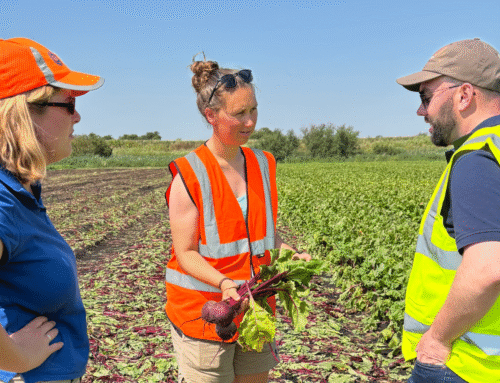
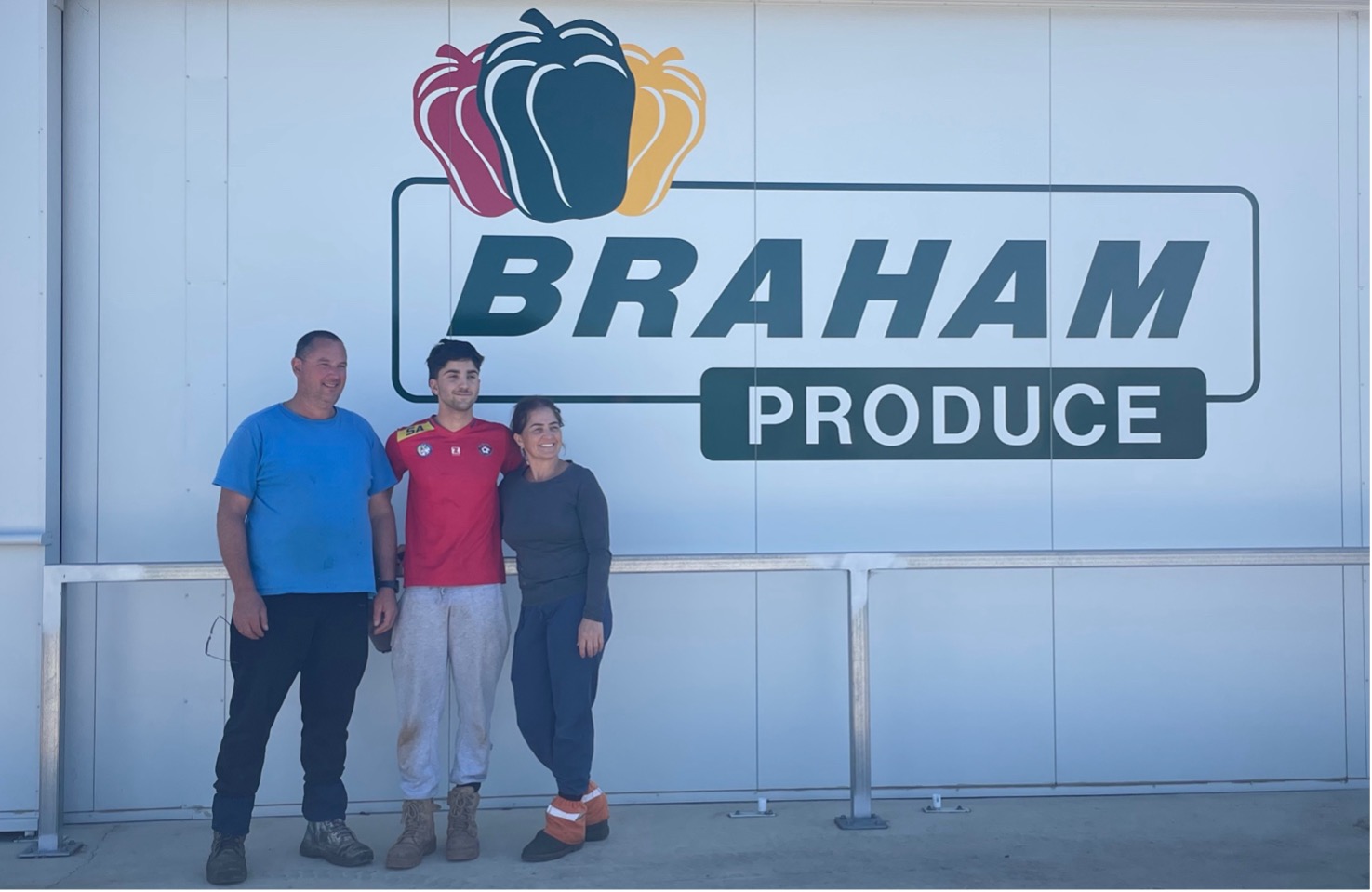
Pictured above: Andrew, Evan and Zurri Braham.